
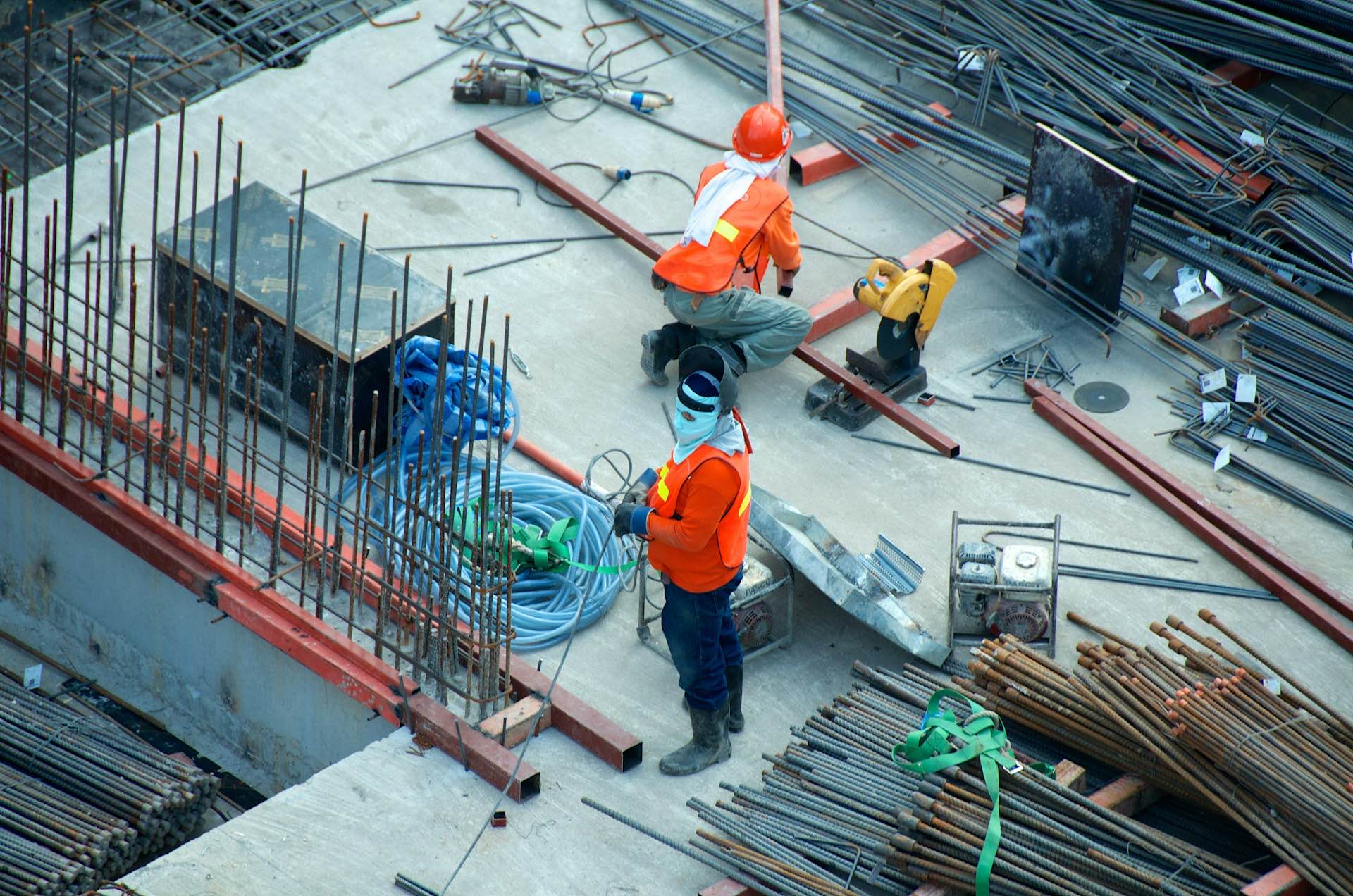
AI for Construction Safety.
Report a hazard without stopping work.
Paper forms don't survive an active job site. Crews report hazards by typing in plain language, from wherever the work is, and Intero turns each report into a case.
Why Construction Safety Needs AI
Active job sites with changing conditions, transient workforces, and tight deadlines that pressure safety compliance. Traditional reporting fails here.
Common construction hazards
Construction consistently ranks among the most dangerous industries. These are the hazards behind most serious site injuries.
Falls from Height
The leading cause of construction fatalities. Scaffolding, ladders, roofs, and open edges create constant fall exposure across every phase of construction.
Struck-By Incidents
Falling objects, swinging loads, and vehicle impacts on active sites. Crane operations, material hoisting, and heavy equipment movement create dynamic strike zones.
Caught-Between Hazards
Trench collapses, equipment pinch points, and unguarded machinery. Excavation work and heavy equipment create crushing hazards that can be fatal in seconds.
Electrical Hazards
Overhead power lines, temporary wiring, and incomplete grounding. Electrocution is one of construction’s “Fatal Four” and often involves workers who aren’t electricians.
Equipment Failures
Crane malfunctions, scaffold collapses, and defective tools. Equipment that moves between job sites may not receive consistent inspection and maintenance.
Contractor Compliance
Multiple contractors with varying safety standards and training levels working simultaneously. Coordinating safety across subcontractors is one of the hardest problems in construction.
How Intero helps on site
Intero removes the barriers that keep hazards from being reported and investigated on an active site.
Conversational Reporting
Workers type safety reports in plain language and attach photos, without stopping work. Intero classifies each one and opens a Case File. No forms, no clipboards.
Hazard Identification & Risk Assessment
Intero's HIRA records the hazards tied to each construction phase, with risk ratings in the Case File. Known risks are documented and assessed instead of left to memory.
Contractor Incident Investigation
When an incident involves a subcontractor, Intero investigates it to a cited root cause and links CAPAs to the responsible owner. Photos attach to the Case File as evidence, and OSHA 300/300A logs are generated from your incidents (DRAFT).
Recurrence Detection
When a new incident is logged, Intero surfaces earlier similar findings from across the sites in your organization. Recurring problems at a specific location or task get connected instead of being investigated from scratch each time.
A hazard reported from 40 feet up.
Illustrative scenario.
A crane operator 40 feet up notices unusual vibration and types a short report from a phone. By the time the operator is back on the ground, the hazard is logged and escalated, and a safety officer is on the way.
Learn More
Explore how Intero's AI-native investigator works on your construction sites.
See how AI works on your construction sites
Walk through a live scenario using your job site's hazards and your reporting workflows.