
Predictive Analytics in BBS: Spotting Risks Before They Happen
The Challenge with Traditional BBS Data
In most organizations, BBS data lives in notebooks, spreadsheets, or basic digital forms. Each entry has value, but it stays local. A supervisor sees what happened on their shift last week. They cannot easily see the same unsafe act repeating across shifts, sites, and crews.
A handful of unsafe ladder uses at one site may not look alarming. Set against hundreds of similar entries across every facility, the pattern is obvious. Without aggregation, those signals are easy to miss.
How Predictive Analytics Adds Value
Predictive analytics closes this gap by processing large volumes of BBS data and surfacing trends early.
- Pattern Detection: Algorithms group similar unsafe acts and highlight behaviors that occur more often than expected.
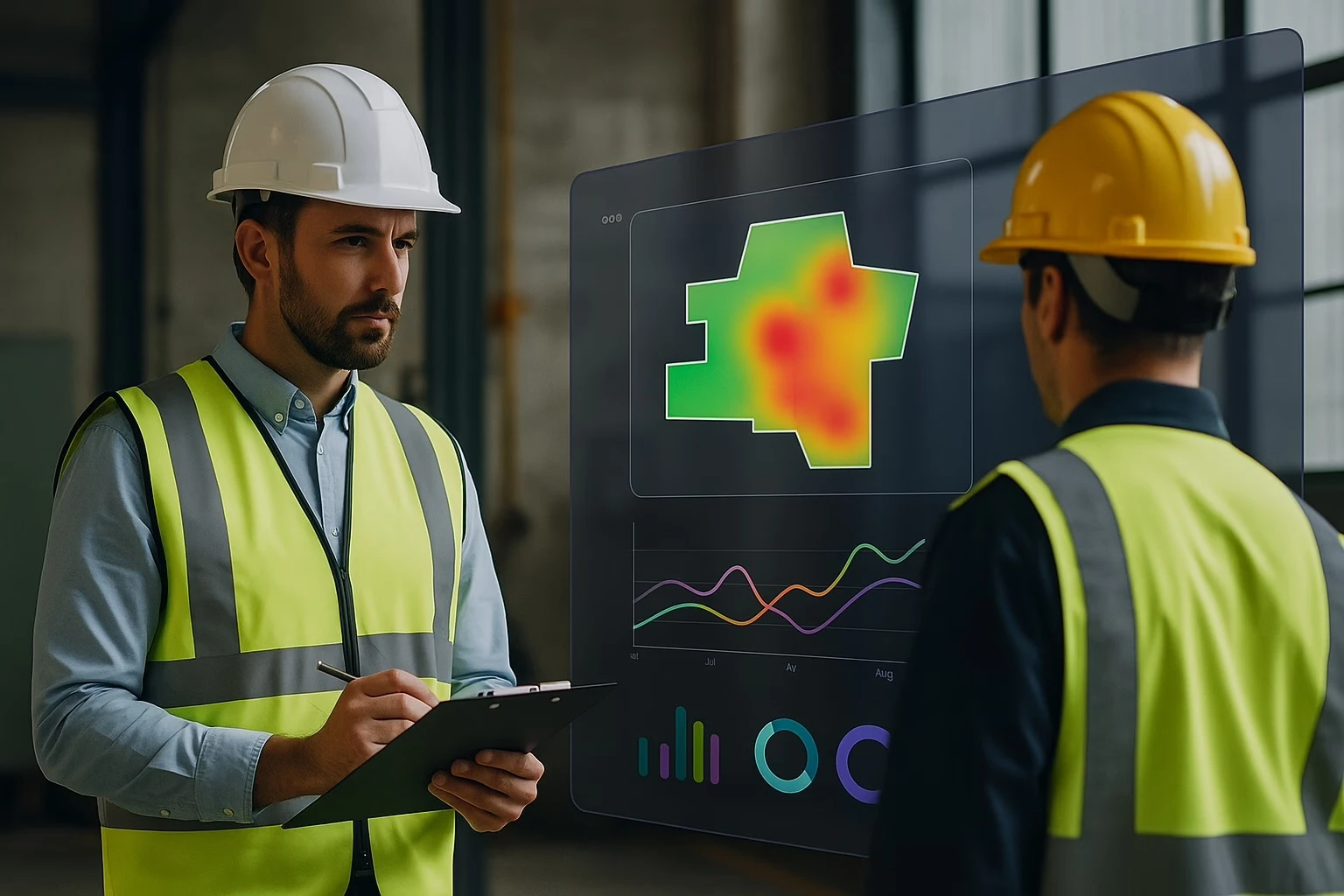
- Hotspot Identification: Geographic or shift-based clusters are flagged, showing where certain violations are more common.
- Trend Forecasting: By tracking frequency over time, the system shows whether a behavior is increasing or decreasing.
- Early Warnings: When a predictive threshold is crossed, supervisors get an alert that prompts intervention before harm occurs.
It moves safety work from reacting after an incident to acting on the warning signs.
Practical Applications in the Field
For safety professionals, predictive analytics changes the day-to-day work:
- Targeted Training: Instead of broad safety talks, training addresses the behaviors most likely to cause harm in a given crew or location.
- Smarter Inspections: Supervisors know which areas or processes deserve closer scrutiny, which makes field time worth more.
- Focused CAPAs: Corrective and preventive actions stop being generic. They address the most frequent and riskiest behaviors in the data.
- Resource Allocation: Leaders can send limited safety resources, whether trainers, auditors, or technology, where the models show the greatest need.
Benefits for Safety Leaders
For leaders responsible for multiple sites, predictive analytics gives a view across the enterprise: which behaviors are driving risk, and whether the interventions already tried are working.
None of this replaces the safety professional. The analytics surface the risk. The safety officer decides what to do about it, in context.
Moving from Insight to Prevention
Predictive analytics in BBS is more than a technology upgrade. It moves the culture toward prevention. Workers see their observations feed a system that acts on them. Supervisors trust that they are working on the right risks at the right time. Leaders act on early signals instead of investigating failures after the fact.
Organizations that make this shift are not leaving BBS behind. They are making it useful. Human observation plus analysis gets them closer to the point of the whole program, which is preventing harm before it happens.